You've scrubbed it. You've sprayed it. You've done everything short of bringing a blowtorch to those pesky black specks. You've stood back proudly, admired your sparkling bathroom and thought, "finally, that's sorted."
Then... a couple of weeks later, those little black spots are back again like they never left.
If you've ever wondered why mould keeps coming back, you're definitely not alone.
The truth is, mould isn't just being annoying for the sake of it. If it keeps returning, there's usually an underlying reason. The good news? Once you understand why it's happening, it's much easier to stop and using the right mould cleaner makes all the difference.
mould is a symptom, not the problem
Think of mould like weeds in the garden. You can pull the weeds out, but if the conditions are still perfect for them to grow or you don't pull them out at the root, they'll just come back.
Mould works the same way.
Cleaning with the wrong product is a bit like pulling the leaves off a weed instead of the roots. Sure, it might bleach and brighten up the top layers, but underneath there is a colony of spores just waiting to attack again.
Similarly, if the conditions remain unchanged, the chances are the mould spores will happily settle back in. That means warm, damp, and poorly ventilated locations with a neon sign to mould that reads, "feel free to move back in!".
To stop mould returning, you need to tackle both the mould and the conditions that allow it to grow.
why mould keeps coming back
1. the mould wasn't completely removed
Sometimes mould looks gone when it isn't.
Some cleaning products simply whiten the stain without breaking down the mould itself, especially on porous surfaces like grout. That means while everything looks lovely for a little while, the mould can continue growing beneath the surface before eventually reappearing.
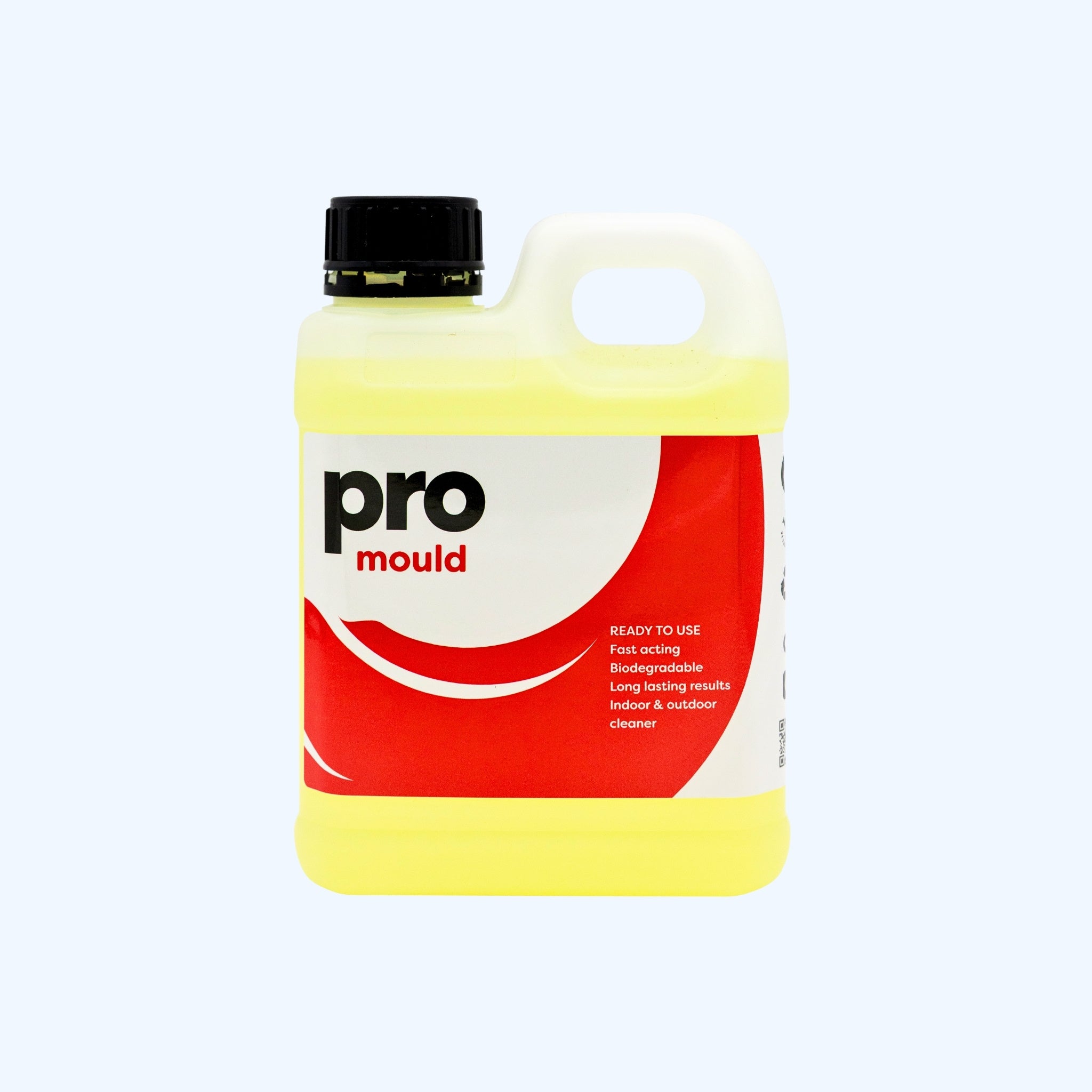
Using a proper mould cleaner, like pro mould, which targets mould at the source, helps prevent this cycle from repeating.
As with any cleaner, you should always follow the directions. Rinsing off the product too early or using it incorrectly can mean failing to remove the mould properly and increase the chances of it returning.
2. too much moisture
Every shower fills your bathroom with warm, humid air. If that moisture can't escape, it settles on walls, ceilings, grout and silicone, creating the perfect environment for mould.
Bathrooms without windows or effective exhaust fans are especially prone to mould problems. Even leaving the bathroom door closed all day can trap moisture inside the room.
3. poor ventilation
This leads us to poor ventilation.
Even if you clean regularly, moisture has to go somewhere. Opening a window, leaving the bathroom door open after showering and running the exhaust fan for 15 to 20 minutes afterwards can make a huge difference.
If your exhaust fan sounds like it's working harder than it actually is, it might be worth giving it a clean too. Dust build-up can reduce how effectively it removes moisture.
4. soap scum and grime
Mould doesn't just love moisture. Soap scum, body oils and everyday grime provide another surface for mould to settle on. That's why regular bathroom cleaning is so important, even if you can't actually see any mould yet.
A clean bathroom gives mould far fewer places to make itself comfortable.
Make sure to give your shower, sink, and around the bathtub a bit of love!
5. damaged silicone
If mould has worked its way deep into old or damaged silicone, it may simply be time for the silicone to retire. If black marks remain after several cleaning attempts, the silicone itself may need replacing.
how to stop mould from coming back
1. clean regularly
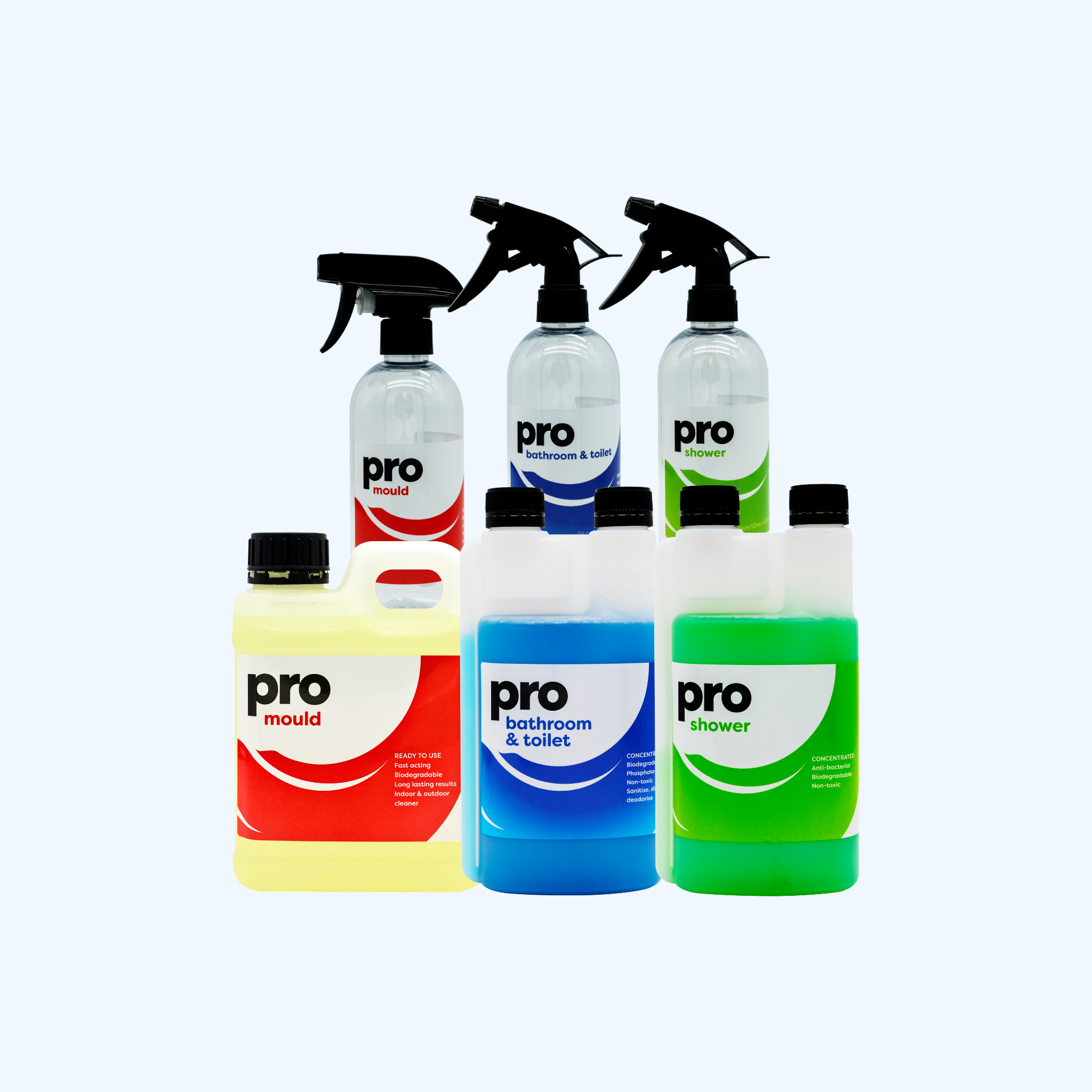
Waiting until mould appears usually means it's already had time to settle in. Giving your shower a quick weekly clean with pro shower concentrate and bathroom a once-over with pro bathroom & toilet concentrate helps remove build-up and keeps the area sparkling. For the easiest solution, check out our bathroom rescue bundle.
2. use a mould inhibitor
Using a product like pro mould as part of your regular cleaning routine helps inhibit future mould growth before it becomes a bigger problem. Think of it as putting up a "No Vacancy" sign for mould.
3. remove excess water
One of the simplest habits is also one of the most effective. Use a squeegee or microfibre cloth after each shower to remove water from the glass and tiles. It's a quick and easy habit!
4. improve airflow
Fresh air is mould's worst enemy. Leave windows open when possible and keep your exhaust fan running after every shower. Even opening the bathroom door can help moisture escape more quickly.
💡 pro tip from kate & jack
Mould can grow in a myriad of places in your bathroom. Be sure to check areas like:
- Grout
- Silicone
- Around windows
- Ceiling corners
- Behind shampoo bottles
- Around taps and handles
- Under shower caddies
- Under bath toys
- Around the exhaust fan
- Around the shower frame
- Behind bathroom furniture
- Under bath mats
Mould loves places that stay damp and don't get cleaned very often. Basically, if it's dark, damp and forgotten about, mould has probably considering moving in.
frequently asked questions
why does mould come back after cleaning?
Usually because the mould wasn't properly removed in the first place or conditions that allow mould to grow haven't changed. Moisture, poor ventilation and soap scum all encourage mould to return.
can i stop mould permanently?
You can dramatically reduce mould by removing it properly, improving ventilation and reducing moisture. While no bathroom is completely immune, regular maintenance makes a huge difference.
does opening a window help stop mould?
Yes. Fresh airflow helps remove moisture from the bathroom, making it much harder for mould to grow.
should i clean mould as soon as i see it?
Absolutely. Small patches are much easier to remove than widespread mould that's been left to grow.
what's the best way to clean mould in the bathroom?
Using an effective mould cleaner, like pro mould, is the first step. Spray, leave it on for 20 minutes, gently agitate if needed, rinse with water, and say goodbye to mould!
the bottom line
If mould keeps coming back, don't lose hope. There are plenty of things you can do. More often than not, it's your bathroom trying to tell you something.
Improve the airflow, reduce moisture, clean regularly and use products designed to remove mould properly, and you'll spend far less time fighting the same battle over and over again.
Because once you've shown mould the door, it really should take the hint.